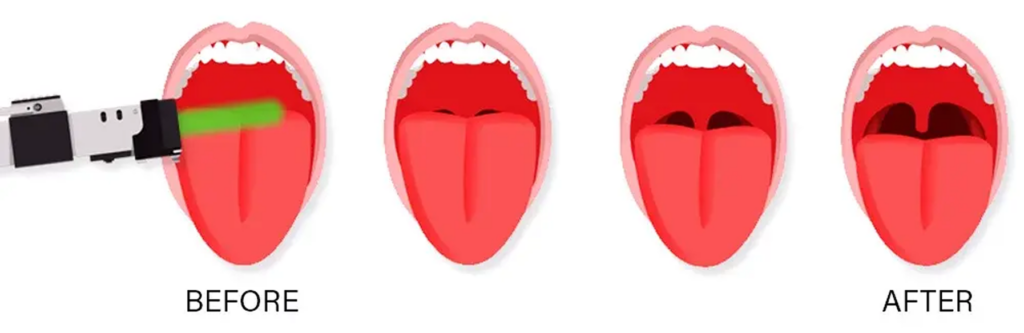
Snoring usually happens when airflow becomes partially obstructed during sleep. As air moves through a narrowed airway, soft tissues such as the soft palate and surrounding throat structures can vibrate. This vibration produces the sound of snoring, but it may also point to a deeper issue with airway support.
For some people, snoring is primarily related to soft tissue collapse. For others, additional factors may contribute, including nasal breathing limitations, tongue posture issues, jaw structure, or sleep-disordered breathing. That is why a thorough evaluation is important before choosing the right treatment approach.