

Abstract geometric artwork: yellow curved lines on black background, with blue parallel lines at the bottom right forming a wave-like pattern.

Snoring Treatment in Santa Monica and Los Angeles

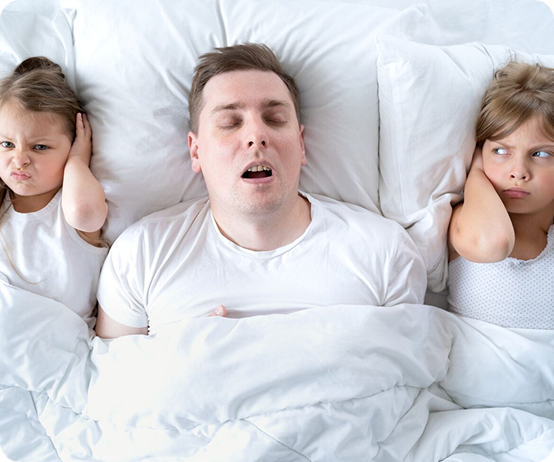
Man sleeping in bed with his eyes closed, flanked by two children who cover their ears and look annoyed on either side of him.

When It’s More Than
Just Noise

Snoring is often dismissed as a harmless nuisance, but for many people, it can be an early sign that breathing is being restricted during sleep. At  The Dentist Lounge, we help patients throughout Santa Monica and the greater Los Angeles area understand why snoring is happening and whether it may be connected to airway health, sleep quality, or long-term function. Rather than focusing only on the sound of snoring, we look at the underlying patterns that affect how the body breathes and rests at night.

Is Snoring a Sign of Sleep Apnea?

Snoring and sleep apnea are closely related, but they are not the same condition. Snoring occurs when airflow is partially restricted during sleep, causing the soft tissues of the throat to vibrate. Sleep apnea involves repeated episodes where breathing becomes significantly limited or temporarily stops altogether.

For many patients in Santa Monica and Los Angeles, snoring exists along a continuum of sleep disordered breathing. In other words, it may be an early warning sign rather than an isolated issue. While not everyone who snores has sleep apnea, most people with sleep apnea snore.

Understanding whether snoring is simply positional or a sign of something more serious requires a thoughtful airway focused evaluation. Learn more about how   breathing and sleep disorders are evaluated and treated.

Common Signs Snoring May Be Linked to Sleep Apnea

Snoring may warrant further evaluation when it is accompanied by:

If these symptoms sound familiar, snoring may be a sign that the airway is not functioning optimally during sleep.

Why Snoring Happens

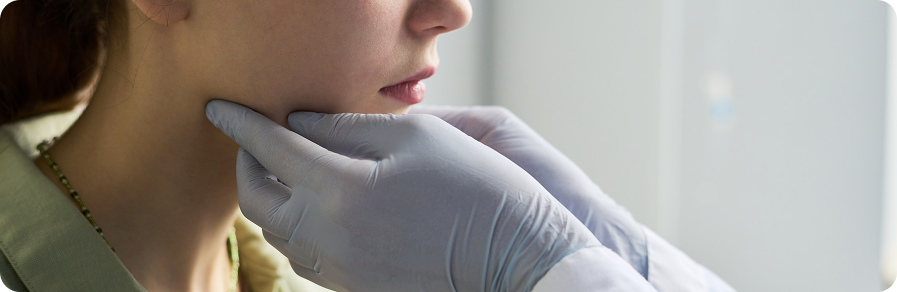
Close-up of gloved hands examining a woman's jawline during a medical checkup.

Snoring is most often caused by airway resistance during sleep. When airflow becomes restricted, surrounding tissues vibrate, producing the sound of snoring. This resistance can be influenced by several factors, including narrow or underdeveloped jaw structure, poor tongue posture or oral muscle dysfunction, mouth breathing, nasal airway restriction, enlarged tonsils or adenoids, and relaxation of soft tissues during sleep.

Rather than addressing snoring as a surface level issue, our team evaluates both the structure and function of the airway to understand what is contributing to breathing resistance.

Snoring, Breathing, and Whole Body Health

Disrupted breathing during sleep can affect far more than rest.

When airflow is compromised, oxygen delivery may be reduced and sleep quality can suffer. Over time, chronic snoring and airway resistance may contribute to daytime fatigue, morning headaches or migraines, acid reflux, mood changes, and increased cardiovascular strain.

In children, snoring may also be associated with mouth breathing, bed wetting, poor sleep quality, or difficulty focusing during the day. Our approach views snoring as part of a broader health picture rather than an isolated symptom.

How We Approach Snoring at The Dentist Lounge

Our approach to snoring is guided by a broader philosophy focused on breathing, growth, and long term function.

We begin with a comprehensive airway and sleep evaluation that looks at breathing patterns, oral and facial structure, muscle function, and sleep related symptoms. When appropriate, we collaborate with medical sleep providers to ensure accurate diagnosis and coordinated care.

This allows us to determine whether snoring is related to airway anatomy, muscle function, sleep habits, or a combination of factors, and to recommend care that aligns with each individual’s needs.

Non Invasive Options for Snoring Support

Whenever appropriate, we prioritize conservative and non surgical options designed to support natural breathing during sleep. Depending on the individual, care may include airway focused oral appliance therapy, myofunctional therapy to improve tongue posture and muscle coordination, laser based treatments such as NightLase to reduce soft tissue collapse, support for nasal breathing and airway efficiency, and sleep screening with collaboration from sleep physicians when indicated. The goal is not simply to quiet snoring, but to improve airflow, sleep quality, and overall health.
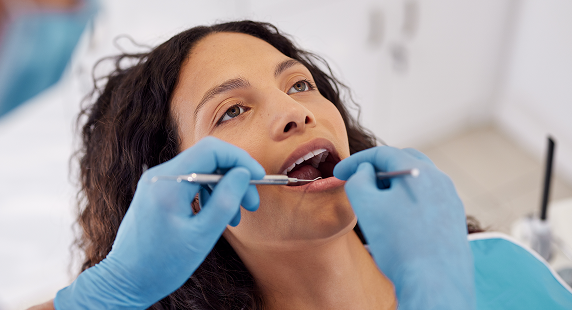
Patient receiving dental care: close-up of a woman with mouth open as blue-gloved hands hold dental instruments inside her mouth in a dental chair setting.

When to Seek a Snoring Evaluation

You may want to consider an airway focused snoring evaluation if snoring is loud, frequent, or worsening, sleep feels unrefreshing despite adequate hours, daytime fatigue is affecting work or daily life, a bed partner has noticed breathing pauses or gasping, or snoring is accompanied by headaches, clenching, or reflux.
Early evaluation can help identify airway concerns before they progress into more severe sleep disordered breathing.

A Thoughtful Next Step Toward Better Sleep

Snoring is often the body’s way of signaling that breathing during sleep is compromised. Understanding the cause allows for more effective, personalized care.

If you are concerned about snoring and are located in Santa Monica or the Los Angeles area, our team is here to help you explore what may be contributing to the issue and what non invasive options may be available.

Schedule a consultation to begin the conversation and take a step toward healthier breathing and better sleep.

FAQs about NightLase

Is snoring always a sign of sleep apnea?

No. Not everyone who snores has sleep apnea. However, chronic or loud snoring can be an early sign of airway resistance and may exist along a continuum of sleep-disordered breathing. An airway-focused evaluation can help determine whether snoring is isolated or connected to a larger sleep or breathing concern.
NightLase can reduce snoring by improving airway stability, though results vary depending on anatomy and tissue response.
Results vary. Some patients notice improvement after a series of treatments, and maintenance sessions may be recommended.
NightLase is not a cure for sleep apnea. Patients with suspected or diagnosed sleep apnea require a comprehensive airway evaluation.
You should consider an evaluation if snoring is loud, frequent, or worsening over time, or if it is accompanied by daytime fatigue, morning headaches, gasping during sleep, breathing pauses noticed by a bed partner, or difficulty concentrating during the day.

Ready to experience whole-body dental care?

Book your consultation today to explore personalized care for breathing, sleep, and long-term health.